About 73% of lung cancer patients might need surgery. This fact highlights how vital surgical treatments are. They help increase survival rates and improve how patients recover. Surgery for lung cancer is not only about taking out tumors. It also helps doctors diagnose and plan the best treatment.
Knowing the different surgeries available can really help a patient. From the older ways of opening up the chest to newer, less invasive methods, surgical treatments for lung cancer are designed to meet everyone’s unique needs. It’s key for patients to understand these options. They should talk with their doctors about what’s best for them.
Key Takeaways
- About 73% of lung cancer patients require surgical treatment as part of their care.
- Minimally invasive techniques offer shorter hospital stays than traditional methods.
- Each surgical procedure is tailored to the size and location of the tumor.
- Smoking cessation is critical before surgery to enhance recovery.
- Ongoing follow-up care is essential for ensuring the best possible outcomes.
- Understanding the implications of lung cancer surgery can empower patients in their treatment journey.
- Surgical interventions significantly improve the chances of long-term survival when executed by top experts in the field.
Understanding Lung Cancer and Its Stages
Lung cancer affects thousands every year. It’s mainly divided into two types: small cell lung cancer (SCLC) and non-small cell lung cancer (NSCLC). Knowing the differences between lung cancer stages is key. It helps patients and doctors decide on the best treatment.
The stage of the lung cancer is crucial for picking treatment options. The stages start at 0, which means the cancer hasn’t spread and can often be cured. They go up to Stage IV, where the cancer has spread to other body parts. Each stage has different treatment possibilities. For early-stage lung cancer, surgery can really help people live longer.
| Stage | Description | Treatment Options |
|---|---|---|
| Stage 0 | Localized cancer that is typically curable | Surgery, no chemotherapy or radiation |
| Stage I | Small tumors not spread beyond the lung | Surgery, may include wedge resection |
| Stage II | More significant tumors, possibly involving nearby lymph nodes | Neoadjuvant chemotherapy, possibly surgery |
| Stage IIIA | More extensive lymph node involvement | Combination of therapies: radiation, chemotherapy, or surgery |
| Stage IIIB | Advanced local disease, more extensive lymph node involvement | Chemotherapy combined with radiation therapy |
| Stage IV | Metastatic lung cancer affecting other organs | Combination of surgery, chemotherapy, targeted therapy, and palliative care |
Understanding lung cancer stages helps tailor treatment for each patient. Surgery plays a crucial role in managing lung cancer, especially in early stages. This knowledge is vital for choosing the best treatment path. This strategy helps manage the disease more effectively.
Importance of Surgical Treatments for Lung Cancer
Surgical treatments are key for early-stage non-small cell lung cancer (NSCLC) patients. For those with a small tumor in the lung’s outer part, lung-sparing surgery or a lobectomy offer hope for a cure. About 63.6% of lung-sparing surgery patients and 64.1% of those who had a lobectomy are cancer-free after five years.
The survival rates are high, with 80.3% for lung-sparing surgery and 78.9% for lobectomy at five years. Trials in Japan even show survival rates over 90%. These figures underline how crucial surgery is in fighting lung cancer.
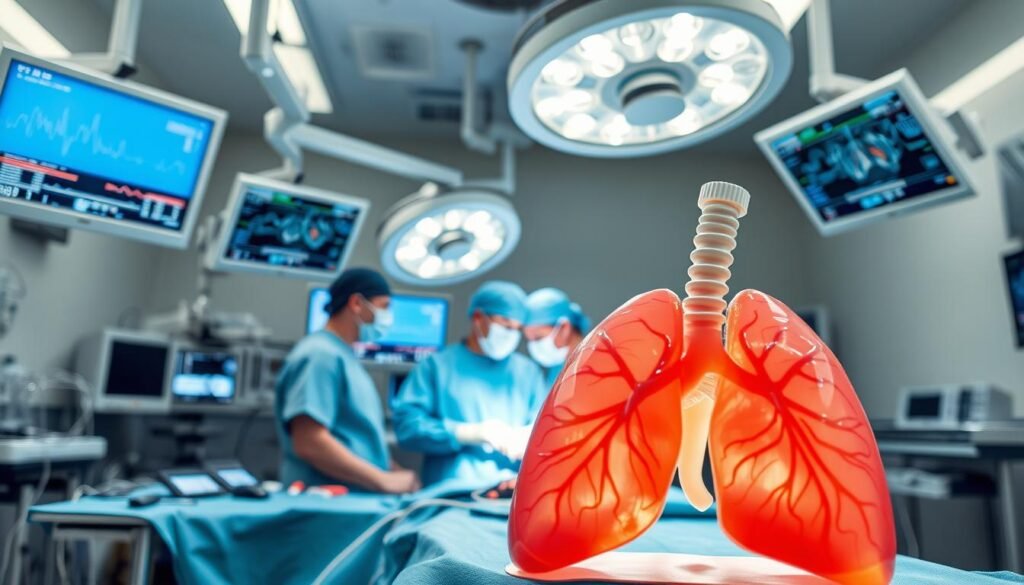
There’s a shift towards minimally invasive surgical methods, broadening who can receive surgery. At Fox Chase Cancer Center, 90% of lung surgeries use these methods. This approach speeds up recovery and reduces risks. Despite lung-sparing surgery having fewer complications, lobectomy is still widely used to remove more extensive risk areas.
The improvements in surgery have led to curing 15% to 25% of lung cancer patients. However, surgery isn’t the best option for everyone. Patients must weigh their options based on their health. Advances in surgery continue to improve outcomes and offer tailored treatments.
Surgical treatments offer lung cancer patients the best shot at recovery and survival. For a deeper understanding of surgery’s role in lung cancer, check out studies on treatment efficacy and new techniques.
Types of Lung Cancer Surgery
Lung cancer surgery is key in fighting this illness. The surgery chosen often depends on the tumor’s size, its location, and the patient’s health. There are three main surgeries for lung cancer: lobectomy, pneumonectomy, and wedge resection. Each one has its benefits and risks. It’s important for patients to understand these before deciding.
Lobectomy
A lobectomy removes a lung lobe. It’s done when the tumor is not too big or close to other parts. People often do well after a lobectomy. They keep most of their lung function. This can lead to a better life after surgery. Also, lobectomy can have lower chances of the cancer coming back.
Pneumonectomy
Pneumonectomy involves taking out a whole lung. It’s used when cancer spreads a lot or is in the middle of the lung. This surgery can help people live longer. But, it can make it harder to breathe afterwards. Patients might take longer to recover. They could face risks related to breathing.
Wedge Resection
Wedge resection removes a small lung part. It’s chosen for small tumors or if the patient can’t handle a big surgery. This method aims to get rid of the cancer but keep as much lung working as possible. It’s very helpful for early-stage lung cancer.
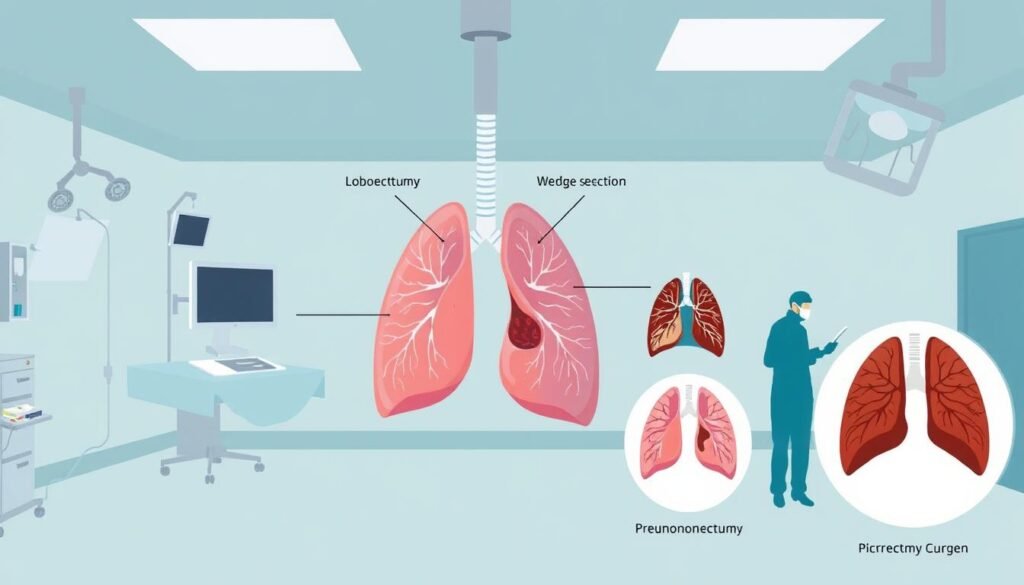
| Type of Surgery | Description | Impact on Lung Function | Recovery Time |
|---|---|---|---|
| Lobectomy | Removal of an entire lobe | Moderate preservation | 1 to 3 days hospital stay |
| Pneumonectomy | Removal of an entire lung | Significant reduction | 3 to 7 days hospital stay |
| Wedge Resection | Removal of a small section | Minimal impact | 1 to 2 days hospital stay |
Understanding lung cancer surgery options is crucial for patients. Choosing the right surgery impacts recovery and long-term health. Patients should talk with their doctors to make the best choice.
Video-Assisted Thoracoscopic Surgery (VATS)
Video-Assisted Thoracoscopic Surgery, known as VATS, is a less invasive way to treat lung cancer. It uses small cuts between ribs for surgery. This lets doctors take out lung tissue and lymph nodes with less harm than older ways.
VATS usually takes 2 to 3 hours. It leads to less pain and quicker healing for patients. People can often leave the hospital a few days after, unlike the longer stay needed for open surgery.
VATS is used for more than lung cancer operations. It helps with other lung issues and certain conditions like hyperhidrosis or hiatal hernia repair. Sometimes, if biopsies show more problems, more surgeries might be needed.
To get VATS, patients usually need to have early-stage disease. Sometimes, it comes after other treatments to make tumors smaller. Choosing the right surgery approach depends on a skilled surgeon’s advice.
Despite its benefits, VATS has some risks like pneumonia or bleeding. There can also be nerve or organ damage. Yet, its advantages make it a good choice for many lung cancer patients.
Preparing for Lung Cancer Surgery
Getting ready for lung cancer surgery is key in treating the disease. It involves thorough preoperative assessments. These are important to make sure patients are ready both in body and mind. Tests may include blood work, checking lung function, and ECGs. They confirm if a patient can safely have surgery.
Preoperative Assessments
Before the operation, there’s a detailed check-up of health and readiness. This happens 1-2 weeks before the surgery:
| Assessment Type | Description |
|---|---|
| Blood Tests | Check general health indicators and organ function. |
| Urine Tests | Screen for infections or other health issues. |
| Lung Function Tests | Evaluate respiratory health and capacity. |
| Electrocardiograms (ECG) | Assess heart function and rhythm. |
| Chest X-rays | Examine lung condition and detect any abnormalities. |
These detailed preoperative assessments tell the surgery team about the patient’s health. They also spot any surgery risks.
Smoking Cessation and Its Importance
Stopping smoking is key for lung cancer surgery preparation. Quitting four weeks before helps avoid surgery problems. It aids in healing. Smoking harms lung function and raises infection risks. It can slow down recovery. Not smoking improves surgery results and healing.
Doctors often suggest prehab programs. These focus on diet, exercise, and mental health. Exercises for breathing and legs help prevent post-surgery issues.
Other prep includes making plans for work, kids, and home. Patients should also know what to bring to the hospital.
For more info on lung cancer surgery prep, visit this link. It has great tips for patients.
Surgical Procedures: What to Expect
Knowing what happens during lung cancer surgery helps ease worry. It makes the experience better. Each surgery is unique and designed for the patient’s specific type of cancer. Patients are kept comfortable and safe with different kinds of anesthesia.
Intraoperative Procedures
Lung cancer surgery involves several crucial steps. Early-stage lung cancer often leads to a lobectomy. This means removing a lung lobe. If cancer spreads to crucial parts of multiple lobes, removing the whole lung, or pneumonectomy, might be needed. Smaller surgeries, like wedge resections or segmentectomies, remove cancer while saving healthy lung areas. Doctors might also check nearby lymph nodes for cancer spread with lymphadenectomy.
Types of Anesthesia Used
The type of anesthesia used depends on the surgery and patient history. General anesthesia is common for lung surgeries. It keeps patients asleep and pain-free. Regional anesthesia might be used for some surgeries. It allows patients to stay awake but pain-free. Anesthesia choice affects patient comfort and recovery time. People having less invasive surgeries usually leave the hospital sooner. They get back to daily life faster than those having open surgeries.
Surgical Risks and Complications
Going through lung cancer surgery comes with challenges, including various surgical risks. It’s important to know about these risks to prepare for what might come after surgery. Understanding what to expect can greatly help with recovery and managing anything that arises.
Potential Postoperative Complications
Several complications may occur after lung cancer surgery. Some of the common issues are:
- Tiredness is widespread and can last for different periods.
- Air leaks might happen, leading to a collapsed lung in some cases.
- The type of surgery and prior health affect breathing problems.
- Infections, like in the wound or chest, can develop afterwards.
- Blood clots in legs or lungs can form because of not moving much.
- Sometimes, there could be too much bleeding needing treatment.
- Long-term pain from nerve damage during the operation can impact recovery.
If you notice symptoms of blood clots, seek help right away as it could lead to serious issues. Using leg exercises, injections, and compression stockings helps lower these risks. Always talk to your healthcare team about any concerns after surgery.
Understanding Surgical Risks
While lung cancer surgery helps some patients, it comes with its own risks. These may include:
- Long-term breathing problems, especially for those already having lung issues.
- Challenges in doing physical activities like swimming, mainly after major surgery like a pneumonectomy.
Doctors aim to reduce these risks by evaluating patients carefully before surgery and creating specific care plans after. For more details on treating lung cancer, check out this in-depth guide on radiation therapy for lung.
| Complication | Incidence Rate | Management Strategies |
|---|---|---|
| Tiredness | Common | Postoperative care, gradual physical activity |
| Air Leak | Rare | Monitoring and possible re-intervention |
| Breathing Issues | Moderate | Breathing exercises, pulmonary rehabilitation |
| Infection | Variable | Antibiotics, wound care |
| Blood Clots | Possible | Exercise, blood thinners, compression stockings |
| Excessive Bleeding | Uncommon | Addressing the cause, potential surgical intervention |
| Long-term Pain | Variable | Medication, physical therapy |
Post-Operative Care and Recovery
After lung cancer surgery, getting the right care is key to a smooth recovery. Managing pain well and going through rehab are crucial steps. They help patients get back to health. It’s important for patients to slowly get back on their feet. This includes keeping an eye on their health and going to all follow-up appointments.
Managing Pain and Discomfort
Pain is common after surgery and can slow down recovery. A custom pain management plan can ease this discomfort. This plan might include medicines, physical therapy, and exercises for breathing. Patients should avoid heavy lifting for 4-6 weeks. This gives the body time to heal and prevents extra strain.
Keeping track of weight is also part of recovery. Patients should weigh themselves twice a week and note any weight changes. A sudden weight gain might mean the body is holding onto fluids. If this happens, talking to a doctor is a must for safety reasons.
Importance of Follow-Up Appointments
Going to follow-up appointments is crucial for keeping an eye on recovery. These visits let doctors check the surgery area for any issues. Checking on patients closely is really important in the first few days after surgery. This is especially true for those who had big operations on their chest.
Rehabilitation programs, like lung therapy, play a big part in recovery. Starting to move soon after surgery and using things like compression stockings can prevent blood clots. All these steps help make the recovery journey better. For more help, patients can look at post-operative care tips from cancer research groups.
Conclusion
Lung cancer surgery is a key part of treating this complex illness. Knowing about different surgeries like lobectomy and segmentectomy is crucial. This knowledge helps patients make good decisions about their treatment. With the right preparation and understanding of the risks, people can take an active role in their recovery.
It’s vital to choose the right doctor and hospital for lung cancer surgery. The experience of the surgeon and the hospital affects the success of the treatment. High-volume hospitals often have better results. Also, new surgical methods, like video-assisted thoracoscopic surgery, are making treatment better, giving patients more hope for survival.
Patients must keep in touch with their healthcare team about treatment choices. Lung cancer is a major issue, with over 1.8 million new cases each year around the globe. Continued research and community support are essential. They help improve care and raise awareness about this serious disease.