Did you know around 60% of metastatic breast cancer patients see their cancer spread to the lungs? This fact underscores the need to know symptoms of breast cancer that has spread to the lungs. Quick spotting of these signs is key for getting the right medical care.
It’s vital to spot the early symptoms of when breast cancer moves to the lungs. Look out for trouble breathing, a cough that won’t quit, and chest pain. Catching these signs early can lead to a quicker diagnosis and treatment. This can truly make a difference in someone’s life.
In this article, you’ll learn about what symptoms to watch for, how breast cancer can move to the lungs, and what treatments can help.
Key Takeaways
- About 60% of metastatic breast cancer patients develop lung metastasis.
- Common symptoms include breathlessness, cough, and weight loss.
- Treatment focuses on managing symptoms and slowing cancer spread.
- Life expectancy varies, but advancements in treatments are improving outcomes.
- Lifestyle changes can help reduce the risk of developing metastatic breast cancer.
Understanding Breast Cancer Metastasis
Breast cancer metastasis means cancer cells spread from the breast to other body parts, like the lungs. This spread happens through blood or lymph systems and starts new cancer growths elsewhere. When a breast tumor spreads to the lungs, it shows the cancer has reached a more serious level, called metastatic or stage 4 breast cancer.
In the U.S., around 168,000 women live with metastatic breast cancer. Nearly 60% will have it spread to their lungs at some point. Even if breast cancer is caught early, about 30% will see it spread. Lung metastasis brings big challenges, with survival times often limited, especially in certain types of breast cancer.
It’s important to know the difference between lung cancers. Primary lung cancer starts in the lungs, but secondary lung cancer comes from elsewhere, like the breast. Symptoms of lung metastasis include pain, coughing, and breathing problems. Detecting and treating it early can help improve survival chances.
What is Metastatic Breast Cancer?
Metastatic breast cancer is also known as stage IV breast cancer. It marks a critical point in cancer’s journey. Here, cancer cells spread from the breast to other body parts like the lungs, bones, and liver. Spreading to the lungs can cause many symptoms and problems.
Doctors use tests like chest X-rays, CT scans, PET scans, and biopsies to diagnose it. These tests help confirm metastatic breast cancer and understand its nature. Knowing if it’s metastatic breast cancer changes the treatment and what patients can expect.
Thanks to new treatments, more people are living longer with metastatic breast cancer. The five-year survival rate for those with cancer spread far is about 29 percent. For regional spread, the rate is higher at 86 percent. Research and clinical trials are key to finding better treatments like chemotherapy, hormone therapy, and targeted drugs.
People with this cancer face various symptoms, from mild to severe. Symptoms include trouble breathing, cough, and swelling in the face and neck. It’s important to know these signs for quick and effective treatment.
Supportive care is also crucial. It includes pain relief, nutrition advice, and emotional support, all improving life quality. With ongoing research, there’s more hope for those diagnosed with metastatic breast cancer. The commitment to progress offers more hope to patients every day.
Common Symptoms of Breast Cancer Metastasis to Lung Symptoms
It’s crucial to know the symptoms of breast cancer spreading to the lungs. Spotting these symptoms early can lead to better treatment. This means a better life quality for those affected. We’ll look at the main symptoms to keep an eye out for.
Overview of Lung Metastases Symptoms
Breast cancer can move to the lungs and cause specific symptoms. People often notice:
- Cough that persists over time
- Shortness of breath
- Chest pain or discomfort
- Recurrent chest infections
- Coughing up blood
- Pleural effusion, which is fluid accumulation around the lungs
Specific Symptoms to Watch For
Some symptoms of lung metastases from breast cancer are particularly important. They include:
- A persistent cough that does not improve
- Excessive coughing leading to blood in the sputum
- Unexplained weight loss
- Fatigue that intensifies over time
For more details on these symptoms and how to manage them, check out resources like this link. It explains the difference between allergy symptoms and lung cancer signs.
Lung Metastases Symptoms and Their Implications
Lung metastases symptoms significantly lower the quality of life for people with metastatic breast cancer. Symptoms like breathlessness and a constant cough make daily tasks more difficult. This affects mental well-being and overall health. Recognizing the implications of breast cancer lung symptoms is crucial for patients and their doctors.
Breathlessness is common and can make easy tasks hard, like climbing stairs or walking a bit. This often leads to anxiety and frustration. It can make people feel less independent. A persistent cough, especially with blood, suggests serious issues. It also affects emotions, making people worry about their future and if treatment will work.
Managing Lung Metastases Symptoms
- Being proactive helps with daily life.
- Telling doctors about symptoms quickly helps adjust care.
- Better communication with medical teams lets patients help manage their treatment.
The lung metastases symptoms impact goes beyond physical issues. It hits relationships and emotional stability too. Providing ongoing support and resources, such as counseling and community groups, is essential. Knowing how broadly these symptoms affect life is key for a care plan that focuses on living well.
Secondary Lung Cancer from Breast Cancer: How It Develops
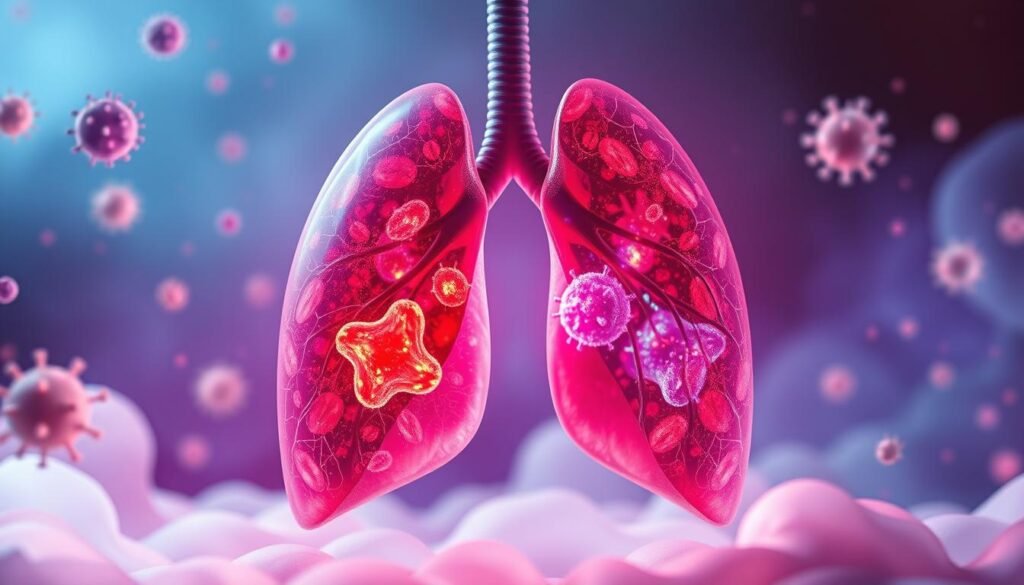
Secondary lung cancer starts when cancer cells from the breast break away. They travel through blood or lymph systems and settle in the lungs. This shows how breast cancer can spread to other parts of the body.
When these cells reach the lungs, they cause symptoms. People may have a constant cough, feel pain in their chest, and have trouble breathing. The lungs are a common place for breast cancer to spread to.
What makes cancer spread? It depends on the tumor’s characteristics, its stage, and the patient. Some breast cancers are more likely to spread because of their aggressive nature.
Knowing about the cancer’s spread helps predict its course. This knowledge is crucial for choosing the right treatment.
The chance of cancer reaching the lungs also depends on the original tumor’s features. This includes things like hormone receptor status and genetics. These details help doctors create personalized treatment plans.
Doctors use images from X-rays, CT scans, and PET scans to find cancer in the lungs. It’s important to tell secondary cancer apart from other lung issues. Treatment focuses on symptom relief and improving life quality. Addressing mental needs is critical for patients living with secondary lung cancer.
Treatment may include chemotherapy and targeted therapy. These can make life better for patients, even though this cancer type can’t be cured. For more info on treatment and tests, visit resources on lung metastases.
Breast Cancer Lung Metastasis Signs to Be Aware Of
Being aware of signs that breast cancer has spread to the lungs is crucial. As the cancer grows, symptoms of lung metastases from breast cancer can appear, signaling urgent need for treatment. Catching these signs early is key to improving treatment success and life quality.
Breathlessness and Wheezing
Many people with lung involvement from breast cancer feel breathless. This can be due to blocked airways or pleural effusion, which is fluid in the chest cavity. Wheezing, a whistling sound when breathing, may also occur. It’s important to address these symptoms quickly to manage the problems caused by lung metastasis.
Persistent Cough and Coughing Up Blood
A cough that keeps coming back can be a sign of lung metastasis. Coughing up blood is a serious symptom that means the disease may be getting worse. These symptoms call for immediate medical check-up. They show that more intensive treatment might be needed. To learn more about these symptoms and treatments, visit here.
Impact of Metastatic Breast Cancer Lung Nodules on Health
Lung nodules from metastatic breast cancer raise big health worries. They are often found through scans. Knowing about these nodules helps in managing and treating the disease right.
Understanding Lung Nodules
Lung nodules are tiny tissue masses inside the lung. They can come from cancer spreading. For metastatic breast cancer patients, nodules mean the cancer has reached the lungs. Research shows cancer could have spread 2 to 4 years before we find the first tumor. This makes keeping an eye on lung health very important for breast cancer patients.
Symptoms Associated with Lung Nodules
It’s key to know the symptoms lung nodules cause. Common ones include:
- Breathlessness
- Wheezing
- A persistent cough
- Coughing up blood
- Chest pain or tightness
- Loss of appetite and weight loss
- Fatigue
These symptoms can really change how well you live. They may show that the breast cancer is getting worse. The goal is to tackle both the cancer and its symptoms. This gives patients a better chance to improve their lives.
Treatment Options for Pulmonary Metastases in Breast Cancer
Treating lung metastases from breast cancer requires different methods, each tailored to the patient. These main treatments include:
- Chemotherapy: This approach uses potent drugs to kill cancer cells. It’s often chosen for tackling widespread cancer.
- Surgery: Surgery is an option when tumors in the lungs are few and can be completely removed. It’s aimed at lessening symptoms and making life better.
- Radiation Therapy: This method targets specific tumor sites. It helps control tumor growth and eases pain and other symptoms.
- Hormone Therapy: For cancers that grow because of hormones, this therapy reduces or stops those hormones.
- Targeted Therapy: This focuses on the unique traits of cancer cells, like gene changes, and stops cancer from growing.
- Immunotherapy: A newer treatment that boosts the body’s immune system to fight cancer better.
Choosing a treatment plan depends on the cancer type, its spread, and the patient’s health. Early treatment helps achieve better results and improves chances of management.

Managing Symptoms of Lung Metastases from Breast Cancer
Patients dealing with lung metastases from breast cancer face tough symptoms. Managing these symptoms well is key to improving comfort and life quality. We’ll cover how to handle things like breathlessness and chronic cough.
Breathlessness Management Strategies
Breathlessness or dyspnea is often seen with lung metastases. A well-rounded approach is very helpful in symptom management. Let’s explore some effective ways to help:
- Breathing exercises: Techniques like pursed-lip breathing can make it easier to breathe.
- Relaxation methods: Mindfulness and guided imagery can help ease anxiety and improve breathing.
- Medication: Doctors might give bronchodilators or corticosteroids to boost lung function.
- Physical therapy: A physical therapist can create exercises to make respiratory muscles stronger.
Cough Relief Options
Coughing is common with lung cancer. To soothe coughing caused by lung cancer, several steps can be taken:
- Cough suppressants: Medications bought over-the-counter or with a prescription reduce coughing.
- Mucolytics: These drugs thin the mucus, making it simpler to clear your throat.
- Hydration: Drinking enough water soothes your throat and eases the cough.
- Relaxation techniques: Managing stress might help lessen coughing episodes.
Using these strategies helps in dealing with lung metastases symptoms better. For more details, please see expert guidelines on managing lung cancer.
Importance of Reporting Symptoms to Healthcare Providers
When dealing with breast cancer, especially with metastasis, patient involvement is key. It’s crucial to report lung symptoms as soon as they appear. Doing so can help catch the disease early, leading to better treatment results and improved well-being. Symptoms like a lasting cough or sudden shortness of breath need immediate attention from doctors.
Talking clearly with healthcare providers makes a big difference. When patients share details about new or worsening symptoms, their care teams can customize treatments better. This back-and-forth talk helps doctors fully understand a patient’s condition. It also makes it easier to change treatments when needed.
Healthcare professionals also have access to resources and support that patients might not know about. Effective symptom management programs can greatly enhance life quality for those facing breast cancer complications. Being proactive in communicating with doctors helps patients get the care that fits them best.
For more info on why reporting lung symptoms is important and to learn about other signs of secondary breast cancer, you can check out this resource.

Conclusion
Knowing about breast cancer spreading to the lungs is key for timely help and better outcomes. If you have breast cancer, watch out for lung-related symptoms. A constant cough, hard breathing, and chest pain need quick check-ups.
Keeping in touch with your doctor is also crucial when dealing with metastatic breast cancer. They use special tools to figure out your situation and plan the best care. Understanding lung spread can help patients and their families make better decisions.
Breast cancer is the most common cancer globally. Knowing the signs of it spreading to the lungs is vital. Early doctor visits, better treatment options, and improved care come from being informed. This leads to better handling of metastatic breast cancer.