In the United States, lung cancer is a major health issue. It impacts millions every year. The 5-year survival rate for lung cancer patients is roughly 26.7%. This number shows why it’s vital to know about lung cancer and its effect on life span. The kind of lung cancer plays a key role in a patient’s outcome. There’s non-small cell lung cancer (NSCLC), which is most common, and small cell lung cancer (SCLC).
Early detection and new treatment advances can make a big difference. For example, people with localized NSCLC have a five-year survival rate of about 65%. This fact stresses the importance of raising awareness. We need to keep talking about how lung cancer outcomes are changing. This is key for patients diagnosed now.
Key Takeaways
- Overall 5-year survival rate for lung cancer is about 26.7%.
- Localized lung cancer has a better prognosis with a 5-year survival rate of 65%.
- NSCLC accounts for 80-85% of lung cancer cases.
- Survival rates decline significantly as the disease progresses.
- Ongoing treatment advancements continue to improve survival statistics.
- Understanding cancer type and stage is critical for determining life expectancy.
Understanding Lung Cancer and Its Types
Lung cancer falls into two categories: Small Cell Lung Cancer (SCLC) and Non-Small Cell Lung Cancer (NSCLC). They vary in how they grow, how they’re treated, and survival chances. Knowing the type helps doctors plan the best treatment.
Small Cell Lung Cancer (SCLC)
SCLC makes up about 10-15% of lung cancer cases. It grows quickly and often spreads early. This means it’s usually found at a late stage. Compared to NSCLC, people with SCLC generally have a lower chance of survival. The main treatments are chemotherapy and radiation.
Non-Small Cell Lung Cancer (NSCLC)
NSCLC is the most common lung cancer, making up around 85% of cases. It’s split into different subtypes. Adenocarcinoma is the most common, making up about 40% of NSCLC cases. It can affect smokers and non-smokers alike. Squamous cell lung cancer is linked to smoking and makes up about 30% of cases. The rarest is large cell lung cancer, known for its aggressiveness.
Getting the right tests for lung cancer is key. They look for specific genetic changes in the cancer. This helps doctors create a treatment plan just for you. The field of lung cancer research is always growing, offering new hope for treatments.
How Long Does a Person with Lung Cancer Live
Lung cancer life expectancy depends on many factors. These include the cancer type, its stage when found, and treatment response. Stats help paint a clearer picture of what to expect, helping with decision-making.
Statistics on Life Expectancy
The five-year survival rates for lung cancer vary widely. For early-stage non-small cell lung cancer (NSCLC), about 65% of patients live for five years. This drops to 37% for those with cancer that has spread to nearby regions. And to 9% for cancer that has reached distant parts of the body. Small cell lung cancer (SCLC) has a 30% survival for localized cases, falling to 3% for distant spread.
In England, nearly 45% of lung cancer patients live for at least a year. However, only 20% make it past five years. These numbers come from cases diagnosed between 2016 and 2020. They show how important early detection and the right treatment are.
| Stage of Lung Cancer | Type | 5-Year Survival Rate |
|---|---|---|
| Localized | NSCLC | 65% |
| Regional | NSCLC | 37% |
| Distant | NSCLC | 9% |
| Localized | SCLC | 30% |
| Regional | SCLC | 18% |
| Distant | SCLC | 3% |
Knowing these stats can help people understand why catching cancer early is crucial. For deeper knowledge on survival rates, you might visit cancer survival estimates.
Lung Cancer Survival Rates by Stage
Lung cancer survival rates offer key details about what patients may expect. Each stage shows how far the cancer has spread. This greatly affects survival chances.
Localized Lung Cancer
Patients with localized lung cancer have a five-year survival rate of about 60%. This high rate shows the chance for effective treatment. The cancer hasn’t spread beyond the lungs. Catching it early is crucial for a good outcome.
Regional Lung Cancer
When lung cancer reaches nearby lymph nodes, it’s called regional lung cancer. The survival rate falls to 33%. This drop points out the harder fight against cancer at this stage. Knowing what this means is key for planning treatment.
Distant Lung Cancer
Distant lung cancer means the cancer has spread to other organs. Now, the five-year survival rate is only 6%. This fact makes it clear why it’s vital to catch lung cancer early.
Lung Cancer Stages and Life Expectancy
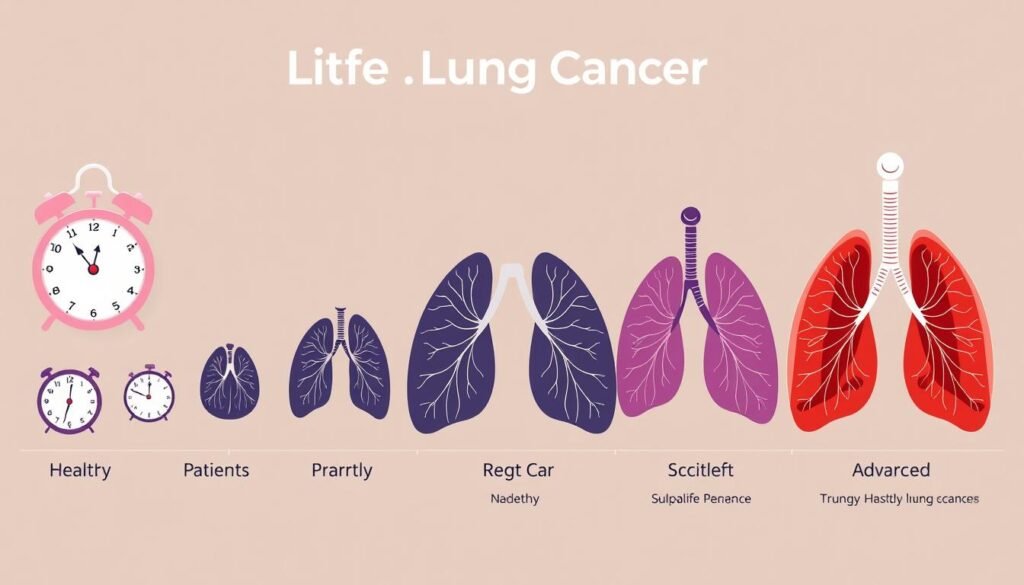
Lung cancer staging is key in knowing the prognosis and choosing the right treatment plan. It includes stages like localized, regional, and distant. Each stage shows how much the cancer has advanced, which deeply affects life expectancy. Generally, being in an earlier stage means a better chance of survival.
Overview of Staging
Lung cancer is put into different stages, and each has its own survival rates. Localized cancer hasn’t spread and offers the best outlook. But, if the cancer has spread to regional or distant areas, it gets harder to treat. For instance, Stage 1 NSCLC has a five-year survival rate up to 65%, while Stage IV drops to about 6%. This shows how critical the stage is for survival.
Impact of Stage on Survival Rates
The stage of lung cancer greatly affects survival rates. In NSCLC, Stage 1 and 2 patients might live between 33 to 55 months. Stage 3 patients might have 12 to 28 months. The situation is dire by Stage 4, with survival at just 4 to 9 months.
For small cell lung cancer (SCLC), outcomes vary by stage as well. Those with limited-stage may survive 12 to 16 months. Extensive-stage patients have a shorter span, only 7 to 11 months. The five-year survival rates show early detection and treatment can truly change lives.
Factors Affecting Lung Cancer Survival
Knowing what affects lung cancer survival is important for both patients and doctors. Many factors play a role, like a person’s age, their health, any genetic traits, and how they react to treatments.
Age and Overall Health
The age of someone with lung cancer really matters for their chances of getting better. Young people tend to do better because they’re generally healthier and handle treatments well. Research shows that older lung cancer patients live about 37.8 weeks on average, while younger ones live up to 57 weeks.
Also, older adults with heart or lung problems face bigger challenges. Being in good health helps people respond better to lung cancer treatments, leading to more hopeful outcomes.
Genetic Factors
Genes also affect how long someone with lung cancer might live. Some gene changes in cancer cells help doctors choose the right treatment. If the cancer has certain genetic traits, targeted treatments might work really well. Testing these genes can pinpoint the most effective treatments, helping to guess outcomes more accurately.
Treatment Response
How well a patient responds to treatment also influences their survival. The choice of treatment, like surgery or chemotherapy, depends on how healthy the person is. Stats show half of the lung cancer patients have a good response to chemo.
Those who are in better condition generally have a better outlook. So, it’s key to look at every factor that might impact lung cancer survival. This way, patients can have the best chance of doing well.
| Factor | Impact on Survival |
|---|---|
| Age | Younger patients have better outcomes; median survival difference noted. |
| Overall Health | Healthier patients fare better; pre-existing conditions lead to poorer prognosis. |
| Genetic Factors | Specific mutations can result in favorable responses to targeted treatments. |
| Treatment Response | Approximately 50% positive chemotherapy response; performance status correlates with prognosis. |
Lung Cancer Treatment and Life Expectancy
Knowing the treatment options for lung cancer is key for patients and families. How they choose to fight the disease affects more than just the moment. It also has a big effect on how long patients may live.
Surgical Options
Surgery is a main choice for early lung cancer. Taking out a lung lobe can improve life expectancy. Early-stage patients do well, with many living 20 years after surgery.
Doctors need to look closely at the tumor’s size and position. This helps decide if surgery is a good option.
Radiation Therapy
Radiation therapy works for both early and late-stage lung cancer. It targets the cancer while saving healthy tissue. Some use it with other treatments, and some on its own, especially if surgery isn’t possible.
It’s shown to help control symptoms and may extend life.
Chemotherapy and Targeted Therapy
Chemotherapy and targeted drugs are crucial as cancer advances. These treatments aim to stop cancer from growing. They’re important, especially when the cancer is advanced.
The five-year survival rate is around 18.6%, showing the need for these treatments. They have changed the way we treat lung cancer, helping people live longer and better.
| Treatment Type | Effectiveness | Impact on Life Expectancy |
|---|---|---|
| Surgical Options | High for localized cancers | 80% 20-year survival for early-stage |
| Radiation Therapy | Effective for localized and metastatic | Can prolong life expectancy |
| Chemotherapy and Targeted Therapy | Essential for advanced stages | Improves quality of life and survival rates |
Palliative Care for Lung Cancer Patients
Palliative care plays a vital role for those with lung cancer. It aims to improve their life quality as they face cancer’s challenges. This care covers a wide range of services focused on symptom management.
It helps with both physical and emotional needs. This way, patients can have a better, more comfortable life despite their illness.
Improving Quality of Life
Palliative care is all about enhancing life quality for lung cancer fighters. It gives pain relief, mental support, and helps manage symptoms. This ensures comfort and dignity for the patients.
Skilled team members offer customized support. They help patients enjoy life and keep up relationships with their loved ones.
Managing Symptoms
Effectively managing symptoms boosts lung cancer patients’ morale. Care providers aim to ease pain, fatigue, and nausea. They use a holistic approach for symptom control.
This care helps patients handle the disease and treatment side effects. It makes them feel more energized and strong during their cancer journey.
| Service | Description |
|---|---|
| Pain Management | Utilization of medications and therapies to alleviate pain and discomfort. |
| Emotional Support | Counseling services that help patients deal with anxiety and depression related to their condition. |
| Symptom Management | Interventions that address nausea, fatigue, and other treatment-related side effects. |
| Caregiver Support | Resources and respite options for family caregivers to prevent burnout. |
Quality of Life with Lung Cancer
Lung cancer patients often look beyond just living longer. They think about their life quality too. This includes both how they feel physically and emotionally.
Physical Well-Being
Keeping strong physically is vital for those with lung cancer. It helps them handle their treatments better. Important aspects are:
- Managing fatigue: Fatigue is a common side effect for patients.
- Maintaining fitness: Light exercises, as recommended by doctors, can keep the body stronger.
- Nutritional needs: Talking to nutritionists improves eating habits, supporting health.
Studies show that vitamins and minerals can help lung cancer patients live longer. This shows how crucial nutrition is for physical health. The Lung Foundation Australia offers resources for optimal health.
Emotional Support and Counseling
Dealing with lung cancer is tough not just physically but emotionally too. It’s hard on mental health. Getting emotional support helps with:
- Guide through anxiety: Counselors give tips for managing stress.
- Support mental well-being: Group therapy and support circles create a sense of belonging.
- Enhance quality of life: Looking after emotional health betters life quality with lung cancer.
Personal stories show how mental health support can make a big difference. It helps people cope better emotionally. And when combined with physical health efforts, it can greatly improve overall well-being.

End-of-Life Care for Lung Cancer
End-of-life care for lung cancer aims to provide comfort and dignity in the final days. Patients and families get support to manage symptoms and emotions. Families need to know about the care options and how to get this help.
Hospice Options
Hospice care is crucial for those in late-stage lung cancer. It focuses on physical comfort and emotional support. Hospice includes:
- Inpatient care for up to five days to give caregivers a break.
- Continuous care for acute symptom management at the patient’s side 24/7.
- Emotional and spiritual support for caregivers during tough times.
Most health insurance, including Medicare and Medicaid/Medi-Cal, covers hospice. Social workers help with financial planning and finding assistance.
Support for Families
Families facing their loved ones’ declining health need a lot of support. Counseling and resources help them handle grief and caregiver stress. Bereavement services offer help up to 13 months after a patient dies, aiding in the grieving process.
Patients can live for a varying time after diagnosis. Hospice care’s importance grows during this time. Families should look into hospice options tailored to their needs, for compassionate care until the end.
Conclusion
Knowing how long people live with lung cancer is key for patients, those who care for them, and doctors. Many things affect how lung cancer progresses. This includes the cancer type, how early it’s found, the patient’s health, and treatment success. Some with advanced lung cancer live many years, while others have less time. This shows why treatments must be made just for each person.
New treatments have brought hope. They include platinum-based chemotherapy and new drugs that target cancer cells. It’s very important for patients to work closely with their doctors. This teamwork helps find the best treatment. It also helps patients have a brighter outlook on their journey.
Even though lung cancer statistics can be scary, there is still hope. Continuous research and better treatments are making a difference. Patients who understand what affects their health and seek the right care can find strength. They can also work towards a better life despite lung cancer.