Between 20% and 23% of chest X-rays for lung cancer symptoms may not show the cancer. This is a worrying limit of using chest X-rays. Although they are common for checking lung issues, their ability to find cancer early is questioned.
This guide will discuss if chest X-rays can detect lung cancer and the alternatives for better lung cancer detection. It’s important for patients and doctors to know that low-dose CT scans might work better for at-risk people.
Key Takeaways
- A chest X-ray may miss smaller tumors, particularly those under 1.5 cm.
- Chest X-rays are not the most effective tools for lung cancer screening.
- Low-dose CT scans are recommended annually for high-risk populations.
- Missed detections often occur in areas obscured by surrounding structures.
- Only a fraction of physicians inquire about smoking history, potentially delaying diagnosis.
Understanding Lung Cancer and its Importance
Lung cancer is a major health issue worldwide, especially in the United States. The lung cancer statistics show it’s a leading cause of cancer deaths. Knowing about this disease is key for managing and treating it well. Realizing how vital early detection is can lead to better survival rates.
Statistics on Lung Cancer
Each year, lung cancer leads to many diagnoses. In 2018, it caused about 154,050 deaths, showing it’s a big problem for public health. Soon, we expect over 234,030 new cases. This data tells us we need more awareness and screening, especially for those at high risk.
Consequences of Late Diagnosis
Spotting lung cancer late can lead to serious consequences of lung cancer diagnosis. This includes fewer treatment choices and worse outcomes. Often, symptoms don’t show until it’s quite advanced. That makes treating it harder. That’s why stressing the importance of early detection is crucial. It means better chances for effective treatment and living longer.
What is a Chest X-Ray?
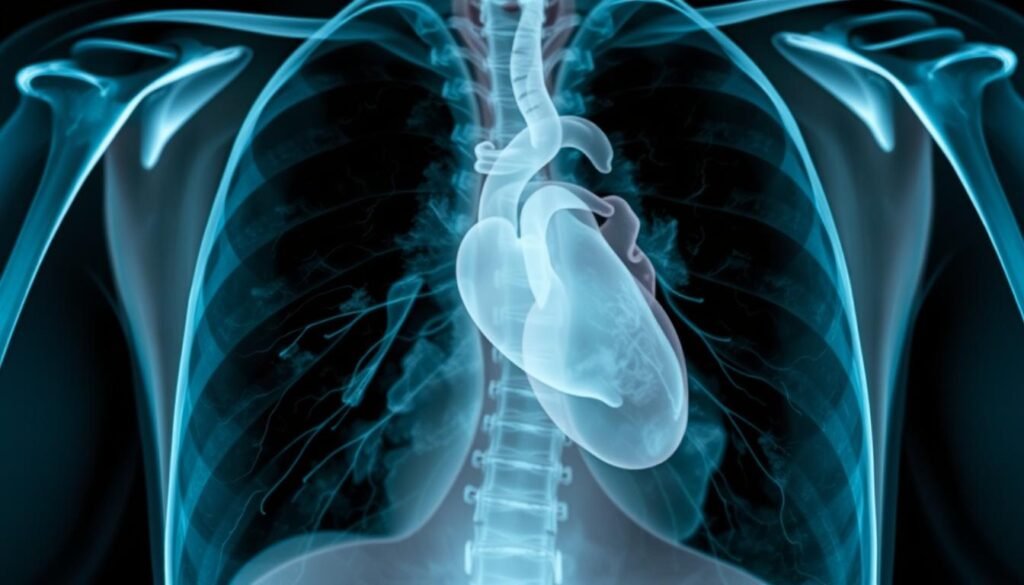
A chest X-ray is a basic test used by doctors. It uses X-ray radiation to take pictures of what’s inside your chest. These pictures show your lungs, heart, blood vessels, and bones. It’s often the first test done when lung or heart problems are suspected.
Introduction to Chest Radiography
Chest X-rays do more than just take pictures. They help find different health problems early. They can show tumors, infections, or odd shapes inside your body. Diseases like pneumonia, tuberculosis, and lung cancer might be caught in these pictures. This leads to more tests if needed.
Purpose and Function
Chest X-rays are key for quick diagnosis and treatment of lung diseases. They can spot big tumors or other signs of health issues. Sometimes, if a chest X-ray shows something strange, doctors may ask for more tests. For example, CT scans give a clearer image of tumors and can check if cancer has spread.
| Condition Detected | Chest X-Ray Capability | Additional Testing |
|---|---|---|
| Pneumonia | Visible signs often evident | Possible follow-up with CT scan |
| Tuberculosis | Can show lung infections | Further imaging may be needed |
| Lung Cancer | May showcase lung masses | CT scan for detailed assessment |
Getting a chest X-ray quickly can help improve lung health outcomes. The benefits of this test are usually greater than the risks of radiation. This makes it a very important tool for doctors.
For more comprehensive information about the differences between imaging techniques, consider this resource on chest X-rays.
Can a Chest Xray Show Lung Cancer?
Understanding the role of a chest X-ray for spotting lung cancer is key. It looks at what X-rays can and can’t do. People often use chest X-rays as a first step to spot lung problems.
Detection Capability of Chest X-Rays
A chest X-ray is usually the first test to look for lung issues. It can show large growths and certain cancers. But, its ability to catch lung cancer varies, with a success rate between 77% and 80%.
Yet, X-rays might not catch up to 23% of lung cancers. Smaller cancers, less than 1.5 cm, are hard to spot. The average lung cancer patient is about 72 years old. This fact shows how vital early checks are.
Limitations of Chest X-Rays in Lung Cancer Diagnosis
Chest X-rays are helpful but have big limitations. Some chest X-ray limitations can cause missed cancer diagnoses. This delay can affect how well patients do later on. One 2019 review showed that about 20% of lung cancers are missed by X-rays.
And a study in 2017 found a miss rate of 45-81% for tumors in the upper lungs. More exact tests, like CT scans, could help catch more cancers early. It’s good for patients and doctors to talk about all testing options. Getting the right diagnosis helps in choosing the best treatment, improving chances of beating lung cancer, especially the non-small cell type.
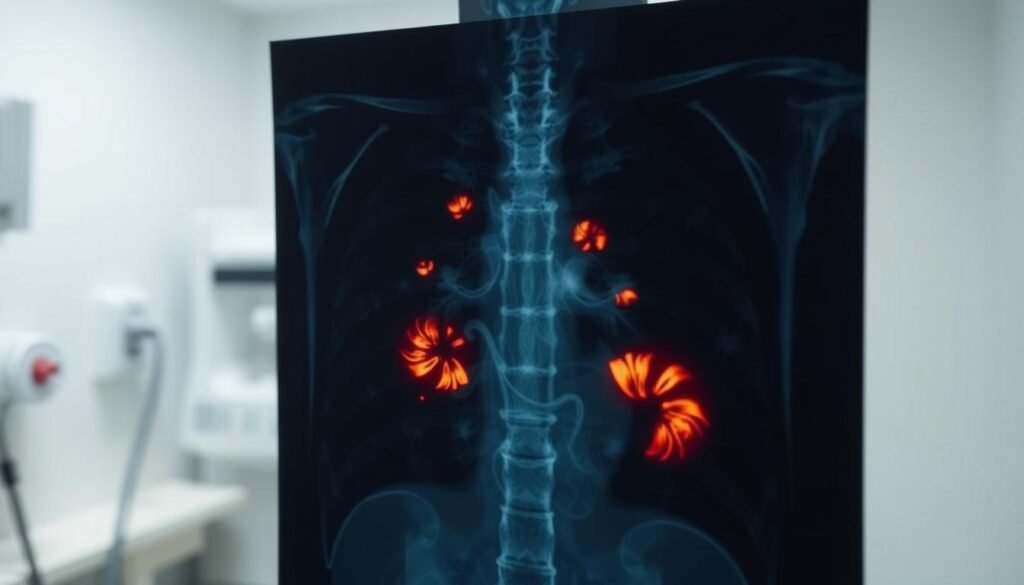
For more info on detecting lung cancer, including X-rays and CT scans, see tests for lung cancer. Also, look at guidelines on effective screening.
Screening Options for Lung Cancer
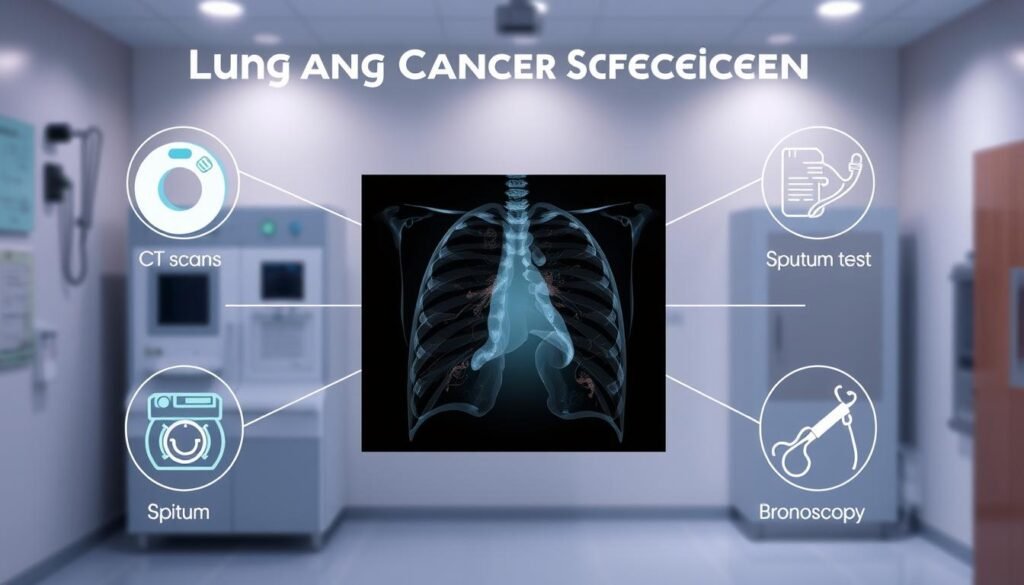
Lung cancer screening has gotten much better, focusing on catching it early in people at high risk. Low-dose CT scans are now the top choice for these screenings.
Low-Dose CT Scans vs. Chest X-Rays
Low-dose computed tomography (LDCT) scans are key for lung cancer screening. They significantly reduce death rates from lung cancer in heavy smokers. People who are 50 to 80 years old and have smoked a lot over the years should get this scan. Unlike these scans, chest X-rays haven’t been as helpful in improving survival rates.
Recommended Screening Guidelines
The guidelines suggest high-risk adults get LDCT scans. These don’t include major health problems that lower life expectancy or surgery choices. High-risk factors are:
- Aged 50 to 80 years
- 20 pack-year or more smoking history
- Current smokers or former smokers who quit in the last 15 years
It’s recommended to get screened every year until one turns 81, quits smoking for 15 years, or develops a major health issue. Most insurance, including Medicare, generally covers these screenings. But, follow-up tests after abnormal findings might lead to extra costs like co-pays.
Signs and Symptoms of Lung Cancer
Knowing the signs and symptoms of lung cancer is crucial for early medical help. Everyone should watch for changes in their health, especially with breathing issues. The first signs often include:
Common Symptoms to Monitor
- Persistent cough: A cough that stays or gets worse can be a sign of trouble.
- Chest pain: If you feel sharp or constant pain in your chest, it needs attention.
- Shortness of breath: Trouble breathing or wheezing is a big warning sign.
- Unintentional weight loss: Losing weight without trying could mean serious health problems.
These lung cancer symptoms can be confused with other breathing problems. This confusion can delay finding out what’s really wrong. It’s very important to keep an eye on your lung health. This is extra true for people who are more likely to get sick.
Importance of Early Detection
Finding symptoms early can make treatment work better. Catching it soon means there’s a better chance treatment, like surgery or chemotherapy, will succeed. Getting regular check-ups is key, especially if you’re over 50 or have smoked a lot. These check-ups can make a big difference in your health.
In short, paying attention to your lung health and knowing what to look for is key. Being aware helps you get help sooner, leading to better chances of getting well.
Risks Associated with Chest X-Ray Screening
When thinking about chest X-ray screening for lung cancer, it’s key to know the risks. This knowledge helps people make smart choices about their health care. It also prepares them for possible outcomes.
Radiation Exposure Concerns
Chest X-ray screenings expose you to some radiation, which is a safety worry. This is true especially if you have many screenings. Even though a single chest X-ray has much less radiation than a CT scan, the risk adds up over time. It’s vital to weigh the benefits against the risks carefully.
False Positives and Misdiagnosis
False positives in chest X-ray screenings can cause a lot of stress. They might also lead to more tests that aren’t needed. Studies show chest X-rays find lung cancer correctly about 76.8% to 79.7% of the time. So, about 20% of lung cancers might not be found early. Understanding the chest X-ray screening risks helps you talk about your choices better with doctors.
| Aspect | Details |
|---|---|
| Radiation Exposure | Lower than CT scans but cumulative risk with repeated screenings. |
| False Positives | May lead to anxiety and unnecessary further testing. |
| Sensitivity Rate | 76.8% to 79.7%, meaning up to 20% of lung cancer cases may be missed. |
| Implications | Delayed diagnosis can affect treatment outcomes. |
The Role of Pulmonary Nodules in Diagnosis
Pulmonary nodules are small lung masses important for spotting various conditions, like lung cancer. They lead to more tests, especially focusing on lung lesion diagnosis. While most nodules are not harmful, knowing about them helps take care of patients well.
Understanding Pulmonary Nodules
Most pulmonary nodules seen on chest X-rays are found by chance. They can come from old infections, scar tissue, or harmless causes. Even though not all nodules mean lung cancer, they need close watch. Doctors use CT scans to keep an eye on them, showing why catching them early matters.
Implications of Finding Nodules on an X-Ray
Finding nodules on a chest X-ray makes doctors look closer to decide what to do next. If nodules get bigger or look odd later, more tests like biopsies might be done to check for cancer. Knowing about these tests, including bronchoscopy or needle biopsy, is crucial for handling a possible cancer threat. The American College of Radiology gives good advice on checking these growths.
Dealing with pulmonary nodules means following up carefully, based on their look and the patient’s history. This ensures treatments are done on time, helping with both harmless and possibly harmful nodules.
Advancements in Thoracic Imaging
New technology in thoracic imaging is changing how we find lung cancer. These improvements help find issues early and make diagnoses more accurate. They also lead to better health outcomes for patients.
Emerging Technologies in Lung Cancer Detection
One breakthrough is the ultra-low-dose (ULD) CT scans. They use lower radiation while keeping images clear. These scans have radiation close to a regular chest X-ray. This change makes lung cancer screening safer.
Another important tool is radiomics. It measures lung changes and can predict cancer outcomes better than old methods. At the same time, AI-driven imaging analysis is reaching near-human accuracy in some tasks.
Improving Accuracy of Diagnoses
New imaging technologies are making lung cancer detection more reliable. For example, digital radiography with temporal subtraction helps spot lung nodules early. Also, CT systems with photon-counting detector technology improve how well we can see and analyze images.
Using these technologies could lower lung cancer death rates. Each year, there are 2.2 million new lung cancer cases. It’s vital to use these imaging advances for quick and correct diagnoses.
Conclusion
The use of chest X-rays for spotting lung cancer has both upsides and downsides. Chest X-rays help see initial signs but aren’t enough on their own. In contrast, LDCT scans are much better, cutting death rates by over 20%.
Many people with a clean initial chest X-ray might find out they have lung cancer much later. This often means the cancer is more advanced. Even though there are cases where early discovery through X-rays helps, they miss the mark 17.7% of the time. Advanced screening tools are crucial for spotting lung issues early.
Making use of the latest screening methods is vital for those at risk of lung cancer. Knowing and looking out for signs can lead to early detection. While chest X-rays contribute to diagnosing lung cancer, they shouldn’t be the only method used.