Did you know isolated lung metastases from prostate cancer are seen in less than 1% of autopsies? This fact shows the rare link between lung and prostate cancer. Prostate cancer is the second leading cause of cancer deaths among men, affecting many families. Meanwhile, lung cancer leads in causing deaths from cancer. These facts bring up interesting questions about their connection. This article looks into how these cancers may be related, focusing on risk factors and recent research.
If you’re also curious about allergies and lung health, there’s an interesting view. It explores how allergies might affect lung cancer risk. This adds another piece to the puzzle of lung and prostate cancer. For more info, check out this detailed article.
Key Takeaways
- Isolated lung metastases from prostate cancer are extremely rare, occurring in less than 1% of cases.
- Lung involvement in prostate cancer typically arises through specific pathways, with significant implications for treatment and diagnosis.
- Research indicates that over 40% of prostate cancer patients may experience lung metastasis.
- Advanced imaging technologies are preferred for diagnosing lung metastases in prostate cancer patients.
- The median age of patients with lung metastases from prostate cancer is around 69 years.
- Patients with prostate cancer exhibiting lung metastasis may remain asymptomatic, complicating diagnosis and treatment.
- The importance of a multidisciplinary approach cannot be overstated when considering the complexities of these intersecting cancers.
Understanding Prostate Cancer
Prostate cancer is a major health issue for men, especially as they get older. About 1 in 8 men in the U.S. will be diagnosed with it in their life. Knowing about prostate cancer, what causes it, and its risk factors is key for staying aware and preventing it.
Overview of Prostate Cancer
This cancer starts in the prostate gland and its seriousness can vary. It might grow slowly or be very aggressive, possibly spreading to lymph nodes and bones. Each year, about 160,000 men in the U.S. find out they have it, making it the second most common cancer in men after skin cancer.
Prostate Cancer Causes
Prostate cancer comes from different causes, like gene changes and hormone shifts. Changes in BRCA1 and BRCA2 genes greatly raise your risk. Prostate swelling and harmful substances, like arsenic, also play a part. What you eat affects your risk too, such as lots of dairy might slightly raise it.
Prostate Cancer Risk Factors
Understanding risk factors helps men make wise health choices. Important risk factors are:
- Age: Most cases are in men over 65.
- Family History: Having a father or brother with it doubles your risk.
- Ethnicity: It’s more common in African American men and Caribbean men of African descent.
- Obesity: It may lead to more severe cancer types.
- Smoking: It’s slightly linked to prostate cancer, but it’s still a risk to your health.
Knowing these factors is crucial for catching the disease early and might help in treatment.
Overview of Lung Cancer
Lung cancer is a major health issue worldwide. It mainly splits into two types: non-small cell lung carcinoma (NSCLC) and small cell lung carcinoma (SCLC). NSCLC makes up about 85% of all cases. SCLC is rarer but grows and spreads faster.
Different Types of Lung Cancer
Knowing the types of lung cancer helps in its treatment. There are several kinds:
- Non-Small Cell Lung Carcinoma (NSCLC): This group has a few subtypes, like adenocarcinoma, squamous cell carcinoma, and large cell carcinoma.
- Small Cell Lung Carcinoma (SCLC): It grows quickly and is often found too late.
- Large Cell Neuroendocrine Carcinoma (LCNEC): This type is rare, making up 3% of cases, and usually has a worse outcome than NSCLC.
Lung Cancer Risk Factors
Many risk factors lead to lung cancer. The top cause is smoking tobacco. Other big risks include:
- Being around secondhand smoke
- Exposure to radon gas
- Working with asbestos and certain chemicals
Knowing these risks can help with prevention and raise disease awareness.
Symptoms of Lung Cancer
Spotting lung cancer symptoms early is key. Typical signs are:
- Persistent cough
- Chest pain that gets worse when you breathe deeply
- Losing weight without trying
- Feeling short of breath
Being aware of these can help, especially if you’re at risk. An early diagnosis can greatly improve treatment success. For more information, check out important resources on lung cancer statistics.
Potential Link Between Lung Cancer and Prostate Cancer
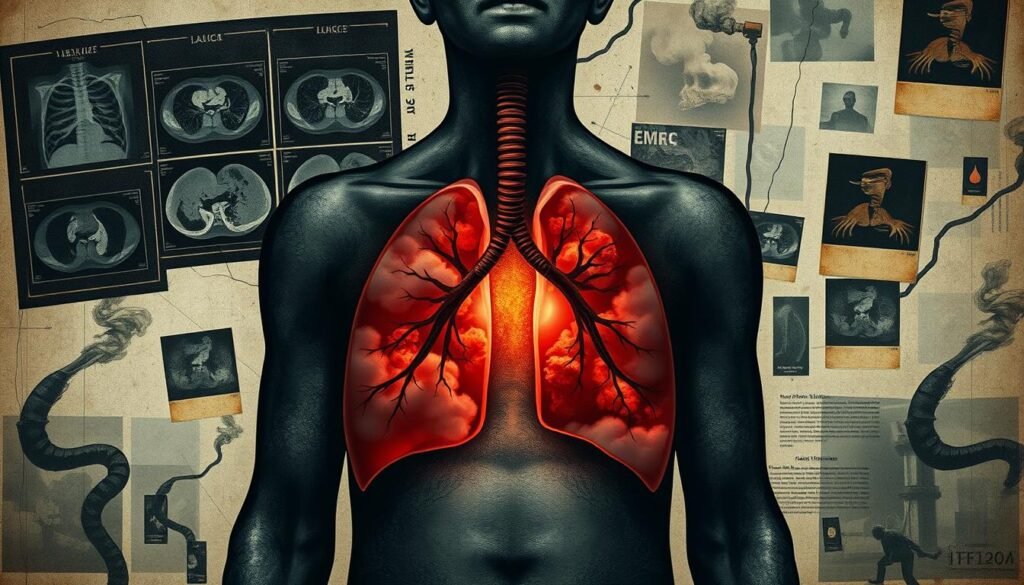
Studying the link between lung and prostate cancer offers new insights into cancer comorbidities. Evidence shows that those with prostate cancer might also have lung issues. This highlights the need to understand their connection for better treatment.
Research Findings on Co-Morbidities
Research points to a significant overlap between lung and prostate cancer. Autopsy data shows that 40% of prostate cancer patients have lung involvement. Yet, less than 1% show isolated lung metastases. A study of 1,290 patients found 48 with lung metastases, with only 11 having solitary nodules.
Risk factors, especially smoking, play a big role in both cancers. High Gleason scores (8 to 10) predict severe prostate cancer. This cancer is a leading death cause in men, after lung cancer. Rates are rising, notably in China, raising alarms.
Diagnosing via PSA levels alone can be misleading. A PSA over 4 µg/L suggests prostate cancer with 71% sensitivity but only 49% specificity. This calls for broader diagnostic methods, including looking for lung metastases and other conditions.
Coping with both lung and prostate cancer is challenging. It requires a holistic treatment approach. Support and education are crucial for those facing these complex issues. For more details, see this informative resource.
Is There a Link Between Lung Cancer and Prostate Cancer?
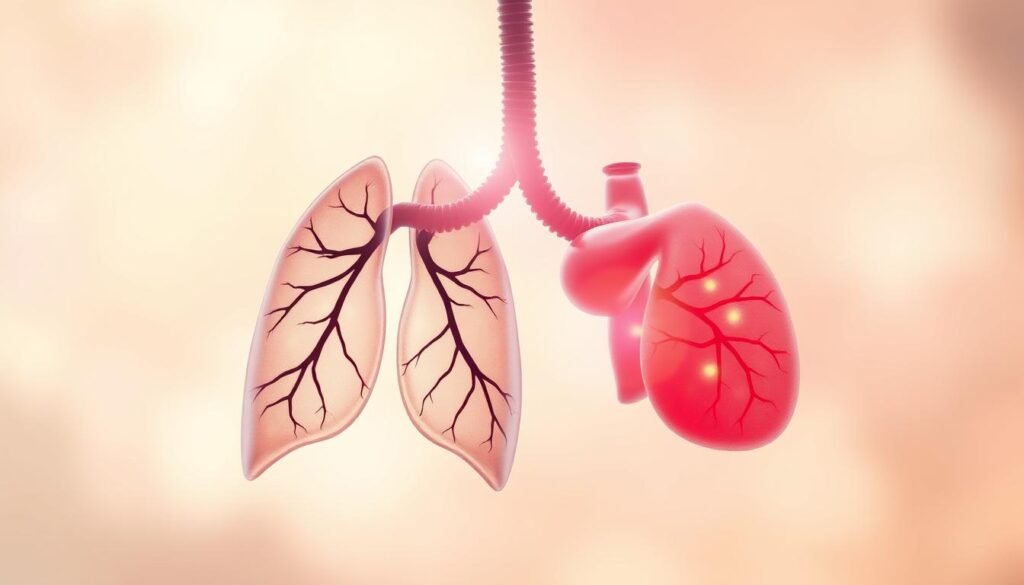
Recent research looks into the link between lung cancer and prostate cancer. Studies show that some patients have both diseases at the same time. This situation reveals the need to study their connection more deeply.
Current Studies and Evidence
Researchers have found 22 cases of lung cancer spreading from prostate cancer. The rate of this happening falls between 5% and 27%. A specific study mentions a rarity in such cases, with an incidence of just 0.86%. Yet, this data calls for further detailed analysis.
Clinical Observations
A review of 46 articles on PubMed sheds light on prostate cancer leading to lung metastasis. It includes a patient case where someone lived about 30 months before their condition worsened due to spreading. About 5-7% of prostate cancer patients have it spread at the time of diagnosis.
However, over 60% can be cured if treated early. Unfortunately, one-third of those treated may still see their cancer return and spread. This highlights the importance of ongoing treatment and monitoring.
| Statistic | Data |
|---|---|
| Incidence of Lung Metastasis from Prostate Cancer | 5% to 27% |
| Solitary Lung Metastasis Incidence | 0.86% (Fabozzi et al.) |
| Complete Cancer Cure Rate | Over 60% |
| Metastatic Disease at Diagnosis | 5-7% |
| Risk of Relapse After Treatment | About 33% |
| Prostate Cancer Metastases to Bone | 85% to 90% |
| Response to Immunotherapy | 3% to 5% |
| Response to PARP Inhibitors | 10% to 15% |
| Survival Post-Metastasis | Potential for 5+ years |
Smoking and Cancer Connection
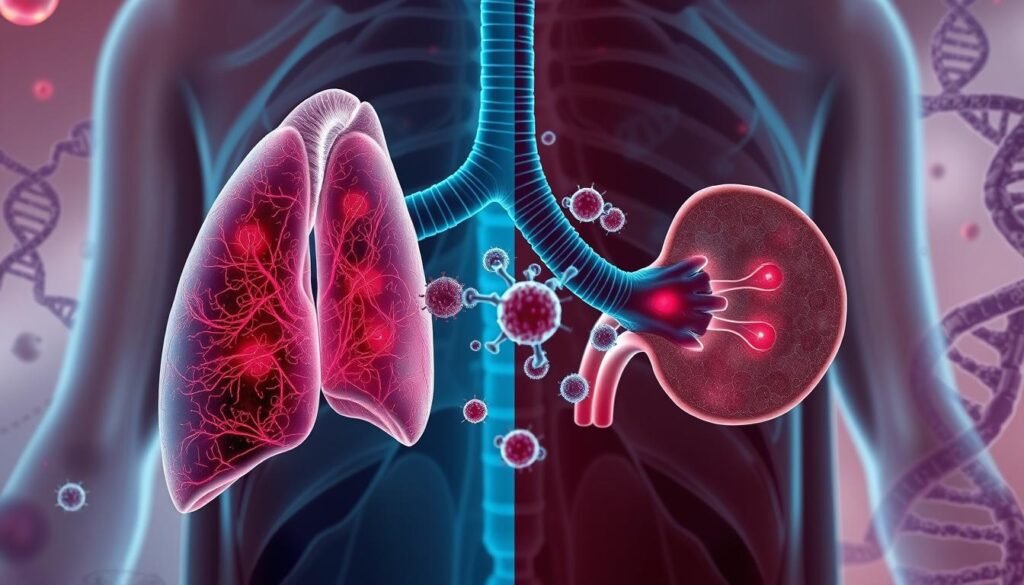
It’s key to know how smoking and cancer are linked in fighting these illnesses. Smoking greatly increases the risk of many cancers, like lung and prostate cancer. Specifically, it’s a big factor for lung cancer, causing almost 90% of cases in men and 70 to 80% in women.
Impact of Smoking on Lung Cancer
Smoking leads to serious health issues. It causes more than 1 million deaths globally every year. In the U.S., lung cancer is the main reason for cancer deaths. About 160,000 people died from it in 2007 alone. If you smoke regularly, your risk of lung cancer can go up by 30 times compared to nonsmokers. Also, 9 out of 10 people who die from lung cancer were smokers or exposed to secondhand smoke.
Link Between Smoking and Prostate Cancer
New research shows that smoking could affect prostate cancer too. If someone with prostate cancer smokes, they might have a higher chance of dying from it. These studies show that smokers with nonadvanced prostate cancer have a lesser risk. But, their risk of dying from severe cases is much higher. This shows how vital it is to stop smoking to lower cancer risks. It points out the double role smoking plays in cancer.
| Statistic | Impact |
|---|---|
| Cigarette smoking accounts for 90% of lung cancer risk in men | High likelihood of developing lung cancer |
| 1 million deaths from lung cancer worldwide annually | Significant global burden of disease |
| 30 times increased risk of cancer for smokers vs. non-smokers | Exponential risk compared to non-smoking population |
| Majority of new lung cancer diagnoses in former smokers | Indicates lasting risks post-smoking |
| Smokers at risk for higher prostate cancer mortality | Importance of monitoring prostate health |
Addressing smoking is key in public health plans to cut down cancer rates. It’s critical for stopping both lung and prostate cancers. These strategies can save many lives.
Genetic Predispositions to Lung and Prostate Cancers
Genetics play a big part in lung and prostate cancer risks. Knowing about these can help us prevent and treat these diseases better. Family history is key in figuring out who might be at risk, especially with prostate cancer.
Family History and Genetic Testing
About 15% of prostate cancers are in men with a family history. Those with affected relatives face a higher risk. Testing for gene changes, like in BRCA1 or BRCA2, helps find risks early and plan better treatments.
Common Genetic Markers
For lung and prostate cancers, certain genes matter a lot. Mutations in genes like BRCA2 or HOXB13 mean a bigger risk of serious prostate cancer. Though not all hereditary links are clear, studies show certain gene changes can hint at risks for different cancers. This info helps in managing risks better.
| Genetic Marker | Associated Cancer Type | Risk Factor |
|---|---|---|
| BRCA1 | Prostate Cancer | Increases risk of hereditary prostate cancer |
| BRCA2 | Prostate Cancer | Higher risk for life-threatening forms |
| HOXB13 | Prostate Cancer | Linked to increased risk |
| Common Genetic Variants | Lung Cancer | Potentially connected through shared risk factors |
Understanding our genetic risks helps us become more aware and take action early if we’re at higher risk.
Environmental Exposures and Their Effects
Environmental exposures are key in affecting cancer, especially with pollution linked to lung cancer. Studies show a strong link between pollutants and lung cancer risk. It’s crucial to understand these connections to prevent cancer effectively.
Pollution and Lung Cancer
Pollution greatly increases the risk of lung cancer. Particulate matter and industrial emissions are linked to different lung cancer types. According to the World Health Organization, lung cancer causes more deaths than any other cancer, with about 1.8 million deaths in 2020. This fact underscores the need to improve air quality.
Occupational Hazards
Workplace dangers are also worrisome. People working with substances like asbestos are at greater risk for lung and prostate cancers. The National Toxicology Program lists over 250 cancer-causing substances, highlighting the need for safer work environments. With better regulations and protections, we can lower cancer rates from these risks.
By reducing environmental exposures, we can help lower lung cancer rates and improve public health.
Preventive Measures and Early Detection
Preventive measures are key in lowering death rates from prostate and lung cancers. Early detection can greatly increase the success of treatment. These cancers have screening guidelines aimed at those at high risk.
Screening Recommendations for Prostate Cancer
Prostate cancer is the most diagnosed cancer in men in the United States, except for skin cancer. Screenings have led to a one-third drop in deaths from prostate cancer. Since starting PSA screening, there’s been a 40% decrease in deaths.
Men 55 to 69 should talk with their doctors about screening options. These options may include PSA tests or digital rectal exams. Younger men, under 40, and those 40 to 54, generally don’t need these screenings. Studies show that hormone therapy like finasteride could lower prostate cancer risk by 25%. Eating more plants and vegetables might also help reduce risk.
Screening Recommendations for Lung Cancer
Lung cancer screenings aim to find high-risk people, especially heavy smokers. Low-dose CT scans are effective for early detection. This shift to better imaging means earlier and more effective treatment.
The National Comprehensive Cancer Network suggests starting annual screenings at age 50 for heavy smokers. About 80% of lung cancer cases are from smoking and other changeable risks. Stopping smoking is crucial to lower lung cancer deaths. Teaching people about the dangers of smoking could stop many cancer cases and save lives.
| Cancer Type | Screening Method | Age Recommendation | Outcome Improvement |
|---|---|---|---|
| Prostate Cancer | PSA Test, DRE | 55-69 years | 40% decrease in deaths |
| Lung Cancer | Low-Dose CT Scan | 50 years (high-risk) | Averting thousands of deaths |
Adding preventive steps into regular health care boosts awareness. It also encourages taking action for one’s health. For more info, a detailed discussion is available here.
Conclusion
Research continues to uncover how lung and prostate cancers are connected. We now know that more than 40% of men with prostate cancer that spreads may see it move to their lungs. This fact stresses the need to dig deeper into how these cancers affect each other.
Luckily, there are treatments that work well for lung metastasis from prostate cancer. Surgery can often lead to good outcomes. This success shows why it’s vital to encourage living healthy and getting regular check-ups. Early detection can lead to better results for those diagnosed.
Doctors and researchers are working hard to learn more about lung and prostate cancers. Their aim is to fill in the blanks in what we know about these diseases. They strive to spread awareness so people can make choices that keep them healthier.